


Request a Quote - New
"*" indicates required fields

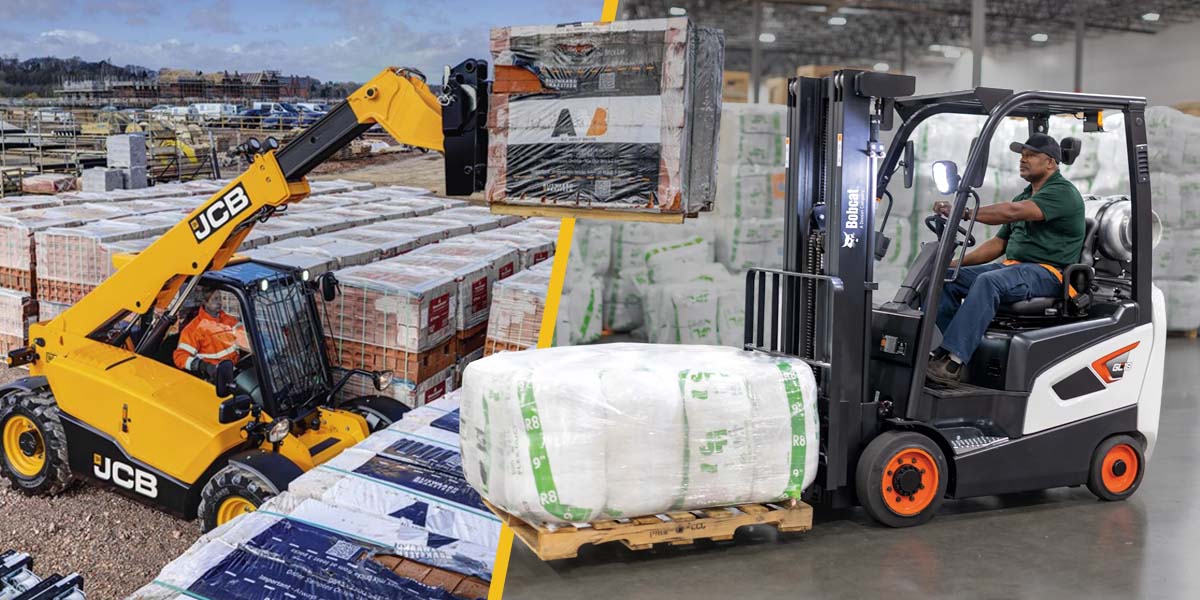
Choosing the right material handling equipment sets the pace for an entire project. Telehandlers, also known as telescopic handlers, and forklifts each excel in specific conditions. Selecting the right machine for your application means considering the surface it will operate on and how far loads need to travel, both vertically and horizontally.
Getting that match right from the start means avoiding the costly delays that come when a forklift sinks into soft ground, or a telehandler can't maneuver the tight aisles a job actually requires. Understanding the core differences between these two machines makes that decision straightforward, and knowing which conditions favor each one keeps projects moving from day one.
Choosing between a telehandler and a forklift comes down to six practical differences:
A telehandler earns its place on jobsites where terrain and reach both factor into the equation. The telescoping boom, which also gives this machine its telescopic forklift name, extends forward and upward, placing loads over walls, onto rooftops, or into spots the machine cannot drive beneath. Four-wheel drive comes standard on most models, providing steady footing on mud, gravel, grades, and other uneven terrain.
Telehandler lift capacity is rated with the boom fully retracted, and it drops as the boom extends outward. A load chart governs safe operation at each position, and attachments such as pallet forks, buckets, jib cranes, work platforms, and grapples allow a single telehandler to handle several job types without swapping equipment. Rough terrain forklifts and telehandlers both handle outdoor surfaces, but only telehandlers offer telescoping boom reach for placing loads over obstacles or at elevated heights.
A telehandler is the right call when a project matches any of these conditions:
A standard forklift's fixed mast and flat-surface limitations make a telehandler the stronger fit in these environments.
A forklift is engineered for efficiency and maneuverability on stable, predictable surfaces, exactly the conditions found across most warehouse and distribution floors.
Its fixed vertical mast raises loads straight up with no forward reach. The difference between a forklift and a telehandler's reach comes down to movement. A forklift's motion stays vertical, while a telehandler also extends forward. That tight turning radius lets a forklift maneuver narrow aisles and loading docks that a larger machine could not navigate.
Standard warehouse models come in electric configurations for indoor or emissions-sensitive settings, as well as internal combustion configurations for outdoor or mixed-use work. Lift capacity varies by model, load center, and configuration, but because a forklift lifts straight up rather than extending a load outward on a boom, operators rely on the machine’s data plate to confirm safe capacity for each load.
A forklift's vertical lift, compact footprint, and quick cycle times make these machines the best choice for operations that include scenarios like these:
Teams weighing a short-term rental instead of a purchase can consult this forklift rental guide for more details.
A telehandler can be used as a forklift in the right conditions. Adding a telehandler forklift attachment, essentially a set of pallet forks, lets the machine perform many of the same tasks as a forklift, particularly on outdoor, rough terrain jobsites.
In these settings, a telehandler with forks often outperforms a standard forklift, combining pallet-handling capability with the ground clearance a job might also need. In indoor applications, where pallet volume and speed matter more than reach, a forklift's tighter footprint and quicker cycle times make it the more practical choice. Rough terrain forklifts offer a middle ground for teams that need outdoor capability without the added boom reach of a telehandler.
The decision point comes down to environment and task type. A telehandler suits outdoor jobs requiring elevation or reach, while a forklift suits indoor, flat-ground work with repetitive pallet moves. Neither machine replaces the other outright. A telehandler's bulkier frame and slower cycling work against it indoors, and a forklift's fixed mast can't handle reach-dependent outdoor jobs.
Both telehandlers and forklifts operate under overlapping federal safety standards:
Operators must complete training and evaluation before independent operation, with routine re-evaluation required at least every three years. Terrain factors into safety, too. A standard forklift running on uneven ground risks tipping over, while an oversized telehandler indoors can restrict visibility in tight spaces. This guidance on choosing the right construction equipment can help teams weigh those trade-offs before making a final decision.
Matching the right machine to the job takes more than a spec sheet. It takes a partner who knows how terrain, reach, and jobsite demands actually play out in the field. ASCO Equipment has spent more than 65 years helping construction, agriculture, and material handling teams across Texas, Oklahoma, and New Mexico find equipment that keeps projects moving.
Whether the job calls for a telehandler, a forklift, or both, ASCO offers purchase and rental options to fit short-term needs and long-term fleets alike. Browse our inventory of telescopic forklifts or our range of forklifts today. If you're still weighing which machine is right for your jobsite, contact our team to talk through the details. We're On It!

John Wright, Brax Wright’s son, joined ASCO in early 2013 as part of the third generation of family leadership. A proud member of the Fightin’ Texas Aggie Class of 2007, John earned a Bachelor of Science in Mechanical Engineering from Texas A&M University.
After graduation, John worked as a structural design engineer for L-3 Communications MID, specializing in C3ISR (Command, Control, Communications, Intelligence, Surveillance, and Reconnaissance) aircraft. In 2012, John completed a Master of Business Administration with a concentration in Strategy and Entrepreneurship from Southern Methodist University.
In January 2013, John joined the family business and played a key role on the Hi-Way acquisition team. He has since taken on a variety of responsibilities. He currently oversees the IT department.
In his spare time, John enjoys weightlifting, woodworking, cooking, and reading. He met his wife, Elizabeth Boothe, at Coronado High School while competing on the Math Team. Together, they have two beautiful daughters.

Courtney Vanderham, Steve Wright’s daughter, joined ASCO in 2010. She earned a Bachelor of Business Administration in Finance from Texas Tech University in 2005 and went on to complete her MBA at West Texas A&M University in 2007 while working at ASCO. Courtney later attended Tulane University, earning a Master of Finance (MFIN) with a specialization in Energy Derivatives and Risk Management.
Following her MFIN, Courtney worked as a sales and use tax consultant for Ryan Inc., North America’s largest tax consulting firm. She returned to ASCO in 2010, where she gained experience in the accounting department in Lubbock before transitioning to Amarillo. She currently serves in an Operations Manager role
Courtney is actively involved in her community as a member of the Junior League of Amarillo, Daughters of the Republic of Texas, and the Power of the Purse committee for the Laura Bush Women’s Health Science Institute.
Courtney is married to Zachary Vanderham of Visalia, California. Together, they have two children. The family share a love for sports, the outdoors, and spending time with friends.
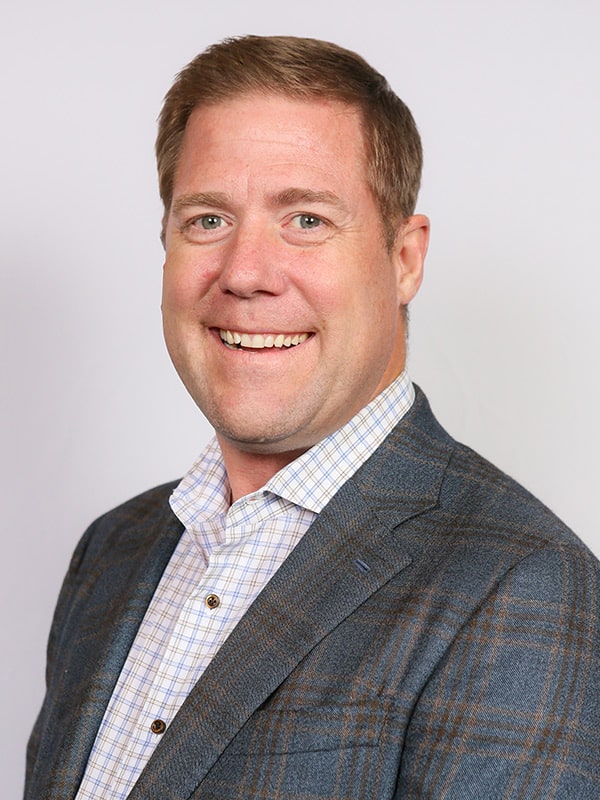
Paula’s son, Chase Key, joined ASCO in 2009 and was the first of the third generation to return to the family business. He earned a Bachelor of Science in Industrial Engineering from the University of Oklahoma and later completed a Master’s degree in Management at Texas Tech University.
After graduating from the University of Oklahoma in 2006, Chase began his career with UPS as part of their engineering team. In 2009, he rejoined ASCO, gaining experience in various roles, including the service department, rental sales, and as branch manager for the Lubbock Case store. Today, Chase serves as South Area Sales Manager.
Chase is actively involved in his community as Vice Chairman of the Covenant Hospital Foundation Board and a member of the Lubbock Executive Association (LEA). An Eagle Scout, Chase fondly recalls completing a 50-mile trek in Canada, an experience that continues to inspire him. He enjoys outdoor activities such as hunting and golf.
Chase is married to Amy Collins of Stillwater, Oklahoma, and together they have three children.
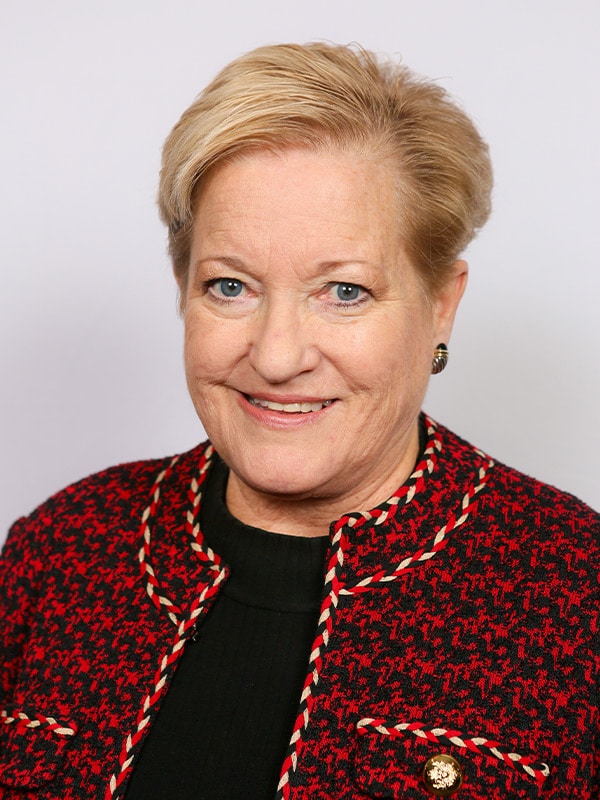
Bill’s daughter, Paula Wright Key, and treasurer for ASCO, is also proud to be part of the family operation. She graduated from the University of Texas at Austin in 1979 with a Bachelor of Business Administration (BBA) in marketing. That same year, Paula married Charles Ellis Key and moved to Dallas, where Charles joined InterFirst Bank as a Vice President.
In 1988, Paula and Charles returned to Lubbock, and Paula began her career at ASCO, working in the accounting department, working with payroll and accounts receivable.
Paula has been deeply involved in her community, serving on various boards, including the Texas Tech Foundation Board, Hospice of Lubbock Board, the Laura W. Bush Institute for Women’s Health, and the Board of Trustees for All Saints Episcopal School.
Paula and Charles have two children, Charles Ellis Key Jr. (Chase) and Carolyn, as well as four grandchildren.
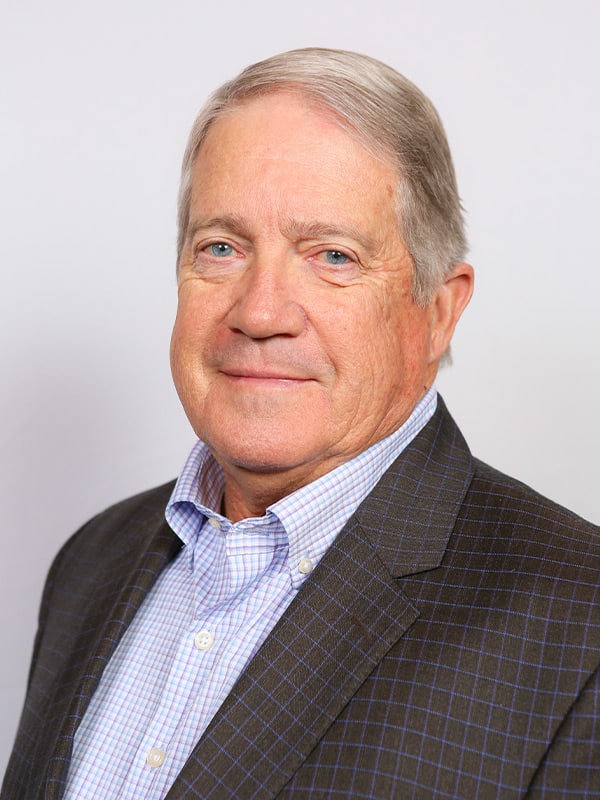
Steve Wright graduated from Texas Tech University in 1974 with a degree in Business Management. Shortly after, he joined his father and brother at ASCO, where he gained experience in nearly every role within the company.
In 1982, Steve and his family moved to Casper, Wyoming, where he managed ASCO Equipment-Wyoming, a Clark-Michigan distributorship serving the state. In 1984, he returned to Amarillo and now serves as President of ASCO.
Steve and his wife, Lea, are deeply involved in local, state, and national politics. Steve has also contributed to his community by serving on several boards, including Senate District 31, the Amarillo Executive Club, the Texas Tech Red Raider Club Board of Directors, and the Advisory Board for Wells Fargo Bank, among others.
An avid outdoorsman, Steve enjoys hunting and fishing. Steve and Lea have three children: Robyn, Courtney, and Brandon.
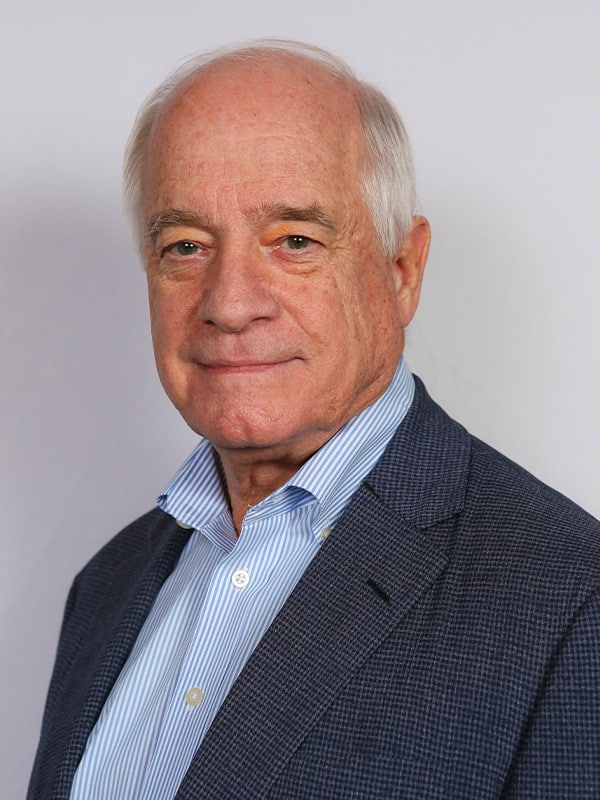
Brax graduated from the University of Texas in 1971 with a Bachelor of Science in Mechanical Engineering. After graduation, he began his career as an Offshore District Project Engineer for Exxon. He also served in the United States Army Reserve for six years, achieving the rank of sergeant in a heavy construction battalion.
Brax has held nearly every position at ASCO, gaining invaluable experience across the company before becoming Chief Executive Officer in 1997. Over the years, he has also served on numerous manufacturer advisory boards as well as other bank and company boards, contributing his expertise to guide key decisions.
Outside of work, Brax teaches the Adult Seekers Sunday School class at First Christian Church, where he serves as an elder. In his spare time, he enjoys golfing, camping, fly-fishing, reading, and writing. Brax is married to Beth, and together they have two children, John and Jill, and five grandchildren.