


Request a Quote - New
"*" indicates required fields

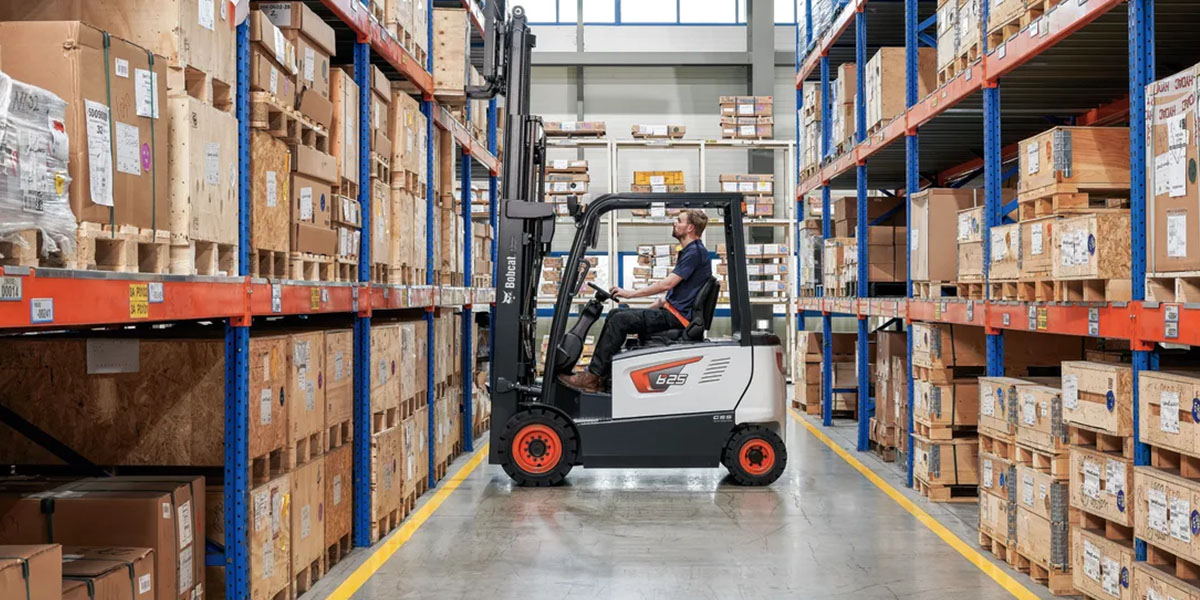
Lead-acid batteries have powered electric forklifts and other material handling equipment for decades, and for a long time, that made sense. But demand for lithium-ion technology has surged across industrial sectors in recent years, and warehouses chasing better productivity, less downtime, and tighter cost control are taking notice. Lithium-ion forklift batteries have become a legitimate, cost-competitive option, not just an experimental upgrade.
Price has traditionally been the sticking point for businesses on the fence. ASCO Equipment now offers high-quality lithium-ion battery solutions at pricing comparable to traditional lead-acid options for demanding industrial applications.
Lithium-ion forklift batteries are known for faster charging, less maintenance, and a longer potential service life, and the case for making the switch keeps getting stronger.
In a warehouse running multiple shifts, charging time determines how many forklifts are available at any given moment and how much flexibility a fleet manager has when demand spikes.
Traditional lead-acid batteries usually take eight to 10 hours to charge, often followed by additional cooling time before the equipment is ready to run again. Lithium-ion batteries typically charge in one to two hours, depending on the battery and charging system. That faster charging window changes how a fleet can be managed day-to-day, turning charging into a relatively quick pit stop rather than a multi-hour commitment.
Lithium-ion batteries also support opportunity charging, which lets operators top off power in small increments during lunch breaks, shift changes, or other natural pauses throughout the day, rather than waiting for a full discharge before connecting to a charger.
This flexibility can reduce the need for spare batteries and the battery-changing stations that come with managing multiple batteries per forklift. It also frees up floor space currently used for charging and storage.
Charging flexibility translates into more available equipment throughout the day. Operations that run two or three shifts will often benefit most, since every hour saved in charging time compounds over a 24-hour schedule. Facilities moving from a one-battery-per-shift model to opportunity charging may need fewer total batteries to keep the same number of forklifts running, which can offset part of the up-front investment in new equipment.
Busy warehouses and distribution centers can reduce idle shifts and increase uptime for their electric forklifts and reach trucks, as well as the rest of their material-handling equipment. The cost of unplanned downtime adds up quickly when equipment can't get back to work. Every minute a forklift sits charging instead of moving product is a minute that affects order fulfillment and labor efficiency.
Faster charging also gives fleet managers one less variable to manage during an already demanding day — predictability that translates into on-time deliveries and fewer scheduling scrambles when margins are tight.
Battery longevity is one of the most overlooked factors in total fleet costs, but it directly affects how often batteries need to be replaced and how much time is spent maintaining them. Lead-acid batteries typically offer approximately 1,200–1,500 cycles when properly maintained, while lithium-ion batteries often provide 3,000 or more charge cycles.
That gap compounds over the life of a fleet, especially in operations that run batteries hard across multiple shifts, and it directly affects how often a facility budgets for replacement batteries. Actual battery life still depends on usage, charging practices, and operating conditions, so results vary from one facility to the next. But the durability advantage holds up even when tested under forklift load profiles rather than in a controlled lab setting. This gives fleet managers a more realistic picture of what to expect on the floor.
Longer battery life is only part of the equation. Here are a few other differences between lithium-ion batteries and lead-acid batteries to keep in mind when you make a decision for your fleet:
Without routine acid handling, businesses can spend less time training staff around battery upkeep. The reduction in hands-on maintenance also makes it easier to standardize procedures across a fleet because there are fewer variables for staff to track from one battery to the next.
Facilities that have historically budgeted extra labor hours for battery upkeep can free up time for other maintenance priorities, such as equipment inspections or operator training that might otherwise get pushed to the back burner. Fewer maintenance tasks also create fewer opportunities to overlook issues. A facility running a tight maintenance schedule across a large fleet benefits from having fewer upkeep categories to track, document, and staff.
Keeping your batteries operating smoothly for longer helps lower labor costs, limit replacement frequency, and simplify planned maintenance programs for your fleet. For facility managers juggling multiple priorities, having more efficient and reliable batteries can open up more time and bandwidth to focus on other parts of the operation, such as equipment inspections, safety training, or emergency calls.
Battery performance that fades as the charge drops can create inconsistency on the floor, especially for operators running heavy loads late in a shift. Lithium-ion batteries generally deliver more consistent voltage throughout much of their discharge cycle, which helps support steady forklift performance as the battery charge decreases, until it approaches its low-charge limits.

While more traditional batteries tend to gradually weaken over hours of use, operators using equipment with lithium-ion batteries can experience similar lift and travel speeds whether a battery is freshly charged or running low. This level of consistency is valuable in operations with narrow-aisle racking, high-rack storage, or other demanding applications where consistent lift speed and precision count. Operators who notice equipment slowing down as a shift wears on can appreciate the difference when the voltage remains steadier throughout the discharge cycle.
Beyond performance, energy efficiency is another advantage worth factoring into a comparison. Compared to lead-acid batteries, lithium-ion systems use roughly 30% less electricity during charging. Lead-acid batteries lose more energy as heat while lithium-ion converts a greater share of input electricity directly into stored power.
The efficiency gain is most noticeable in operations that run around the clock, where even small improvements add up across dozens of batteries cycling through chargers every day. Over a full year, that difference can positively impact an operation's energy budget. A facility running 50 forklifts across three shifts, for example, charges far more batteries per week than a single-shift operation, which means even small efficiency gains can scale quickly.
In high-utilization warehouses, using higher-efficiency batteries can translate into meaningful savings in monthly energy costs, particularly for operations that charge dozens of batteries across multiple shifts. This advantage is part of why many fleet managers now view lithium-ion as a performance upgrade as much as a cost-saving measure.
Less energy lost during charging also reflects the broader shift toward electric material handling equipment, which continues to gain ground in high-utilization operations looking to control costs and reduce waste wherever possible.
Safety considerations around battery charging deserve careful attention, as the charging area is often one of the most hazardous spots in a warehouse. Lead-acid batteries contain sulfuric acid and can release hydrogen gas during charging, requiring specific handling procedures and ventilation, while lithium-ion batteries eliminate sulfuric acid exposure and do not produce hydrogen gas as a normal part of charging, though they still require proper charging procedures and battery-specific fire-safety measures.
Staff working near lead-acid charging stations typically follow protective measures to avoid exposure. Extra precautions add a layer of complexity to otherwise routine tasks. Lithium-ion systems can simplify routine battery handling by reducing the need to manage federally mandated handling procedures that are often associated with lead-acid systems, such as eyewash stations and acid neutralization supplies.
It's important to remember that lithium-ion batteries are not risk-free, and proper handling still matters as much as it does with lead-acid systems. The difference lies in which hazards a facility needs to manage and how it trains its staff.
Beyond supporting facility safety, the switch can also free up valuable floor space. Because lithium-ion batteries can often be recharged during breaks, they also reduce the need for:
The overall potential for space and equipment savings will depend on your fleet and facility requirements, but for facilities looking to reclaim floor space for storage or workflow improvements, it's worth exploring.
The up-front cost has traditionally been one of the biggest reasons businesses have stayed with lead-acid batteries. However, with more affordable lithium-ion options now available from ASCO Equipment, the price difference is no longer the barrier it once was for many operations. It's worth revisiting even for facilities that ruled out lithium-ion a few years ago.
When comparing battery options, look beyond the purchase price to the total cost of ownership. Your expenses depend on a variety of individual factors such as:
Each of these factors adds up differently depending on how a facility operates, but together they often tell a more complete story than the initial quote. The cost of unplanned downtime often outweighs any up-front savings from choosing a cheaper battery, particularly for operations where even a few hours of lost productivity can lead to significant financial losses. Running those numbers against your own fleet size and shift schedule gives a more accurate picture than relying on industry averages alone.
Depending on your operation, lithium-ion may offer a compelling combination of reduced ongoing costs, enhanced charging flexibility, and greater equipment availability, though the right fit still depends on how your fleet operates day-to-day. A single-shift operation with light usage will see a different return than a facility running three shifts with heavy loads, which is why it pays to look at the full picture rather than a generic comparison.
Warranty coverage adds another layer of value to consider, as it offers protection if anything that is covered under the policy goes wrong. Some solutions offer extended warranty coverage of up to five years or 10,000 hours, depending on the manufacturer and battery model, which can further offset the initial investment over time. These figures carry more weight when applied to your own usage patterns rather than viewed as general industry benchmarks.
Facilities that run the comparison may find the payback period shorter than expected once energy savings, reduced labor, and fewer replacement cycles are factored in together.
A modern lithium-ion battery can also provide battery health and performance information through an integrated Battery Management System (BMS) that tracks performance in real time. This gives fleet managers additional insight into battery operation, and the BMS data itself offers more advanced monitoring capabilities worth exploring separately. Whether the manager or operation needs to use these capabilities will likely depend on how closely they want to track individual battery performance across a fleet.
Every warehouse is different, but for many, the switch to lithium-ion forklift batteries can be a smart choice that helps companies get more out of their electric warehouse equipment.
If you operate forklifts or other material handling equipment on a jobsite, ASCO Equipment can help you explore affordable lithium-ion options and determine what makes sense for your operation. With over 65 years of service experience behind us, we bring the skills and expertise fleet managers can count on when making critical decisions to enhance efficiency, safety, and cost-effectiveness. From initial product selection to ongoing support, the team treats every fleet decision as a partnership, not just a transaction.
To learn more about lithium-ion battery solutions for your material handling needs, contact ASCO Equipment today. We're here to help you boost your work performance and stay productive through every operation.
ASCO Equipment. We're On It!

John Wright, Brax Wright’s son, joined ASCO in early 2013 as part of the third generation of family leadership. A proud member of the Fightin’ Texas Aggie Class of 2007, John earned a Bachelor of Science in Mechanical Engineering from Texas A&M University.
After graduation, John worked as a structural design engineer for L-3 Communications MID, specializing in C3ISR (Command, Control, Communications, Intelligence, Surveillance, and Reconnaissance) aircraft. In 2012, John completed a Master of Business Administration with a concentration in Strategy and Entrepreneurship from Southern Methodist University.
In January 2013, John joined the family business and played a key role on the Hi-Way acquisition team. He has since taken on a variety of responsibilities. He currently oversees the IT department.
In his spare time, John enjoys weightlifting, woodworking, cooking, and reading. He met his wife, Elizabeth Boothe, at Coronado High School while competing on the Math Team. Together, they have two beautiful daughters.

Courtney Vanderham, Steve Wright’s daughter, joined ASCO in 2010. She earned a Bachelor of Business Administration in Finance from Texas Tech University in 2005 and went on to complete her MBA at West Texas A&M University in 2007 while working at ASCO. Courtney later attended Tulane University, earning a Master of Finance (MFIN) with a specialization in Energy Derivatives and Risk Management.
Following her MFIN, Courtney worked as a sales and use tax consultant for Ryan Inc., North America’s largest tax consulting firm. She returned to ASCO in 2010, where she gained experience in the accounting department in Lubbock before transitioning to Amarillo. She currently serves in an Operations Manager role
Courtney is actively involved in her community as a member of the Junior League of Amarillo, Daughters of the Republic of Texas, and the Power of the Purse committee for the Laura Bush Women’s Health Science Institute.
Courtney is married to Zachary Vanderham of Visalia, California. Together, they have two children. The family share a love for sports, the outdoors, and spending time with friends.

Paula’s son, Chase Key, joined ASCO in 2009 and was the first of the third generation to return to the family business. He earned a Bachelor of Science in Industrial Engineering from the University of Oklahoma and later completed a Master’s degree in Management at Texas Tech University.
After graduating from the University of Oklahoma in 2006, Chase began his career with UPS as part of their engineering team. In 2009, he rejoined ASCO, gaining experience in various roles, including the service department, rental sales, and as branch manager for the Lubbock Case store. Today, Chase serves as South Area Sales Manager.
Chase is actively involved in his community as Vice Chairman of the Covenant Hospital Foundation Board and a member of the Lubbock Executive Association (LEA). An Eagle Scout, Chase fondly recalls completing a 50-mile trek in Canada, an experience that continues to inspire him. He enjoys outdoor activities such as hunting and golf.
Chase is married to Amy Collins of Stillwater, Oklahoma, and together they have three children.

Bill’s daughter, Paula Wright Key, and treasurer for ASCO, is also proud to be part of the family operation. She graduated from the University of Texas at Austin in 1979 with a Bachelor of Business Administration (BBA) in marketing. That same year, Paula married Charles Ellis Key and moved to Dallas, where Charles joined InterFirst Bank as a Vice President.
In 1988, Paula and Charles returned to Lubbock, and Paula began her career at ASCO, working in the accounting department, working with payroll and accounts receivable.
Paula has been deeply involved in her community, serving on various boards, including the Texas Tech Foundation Board, Hospice of Lubbock Board, the Laura W. Bush Institute for Women’s Health, and the Board of Trustees for All Saints Episcopal School.
Paula and Charles have two children, Charles Ellis Key Jr. (Chase) and Carolyn, as well as four grandchildren.

Steve Wright graduated from Texas Tech University in 1974 with a degree in Business Management. Shortly after, he joined his father and brother at ASCO, where he gained experience in nearly every role within the company.
In 1982, Steve and his family moved to Casper, Wyoming, where he managed ASCO Equipment-Wyoming, a Clark-Michigan distributorship serving the state. In 1984, he returned to Amarillo and now serves as President of ASCO.
Steve and his wife, Lea, are deeply involved in local, state, and national politics. Steve has also contributed to his community by serving on several boards, including Senate District 31, the Amarillo Executive Club, the Texas Tech Red Raider Club Board of Directors, and the Advisory Board for Wells Fargo Bank, among others.
An avid outdoorsman, Steve enjoys hunting and fishing. Steve and Lea have three children: Robyn, Courtney, and Brandon.

Brax graduated from the University of Texas in 1971 with a Bachelor of Science in Mechanical Engineering. After graduation, he began his career as an Offshore District Project Engineer for Exxon. He also served in the United States Army Reserve for six years, achieving the rank of sergeant in a heavy construction battalion.
Brax has held nearly every position at ASCO, gaining invaluable experience across the company before becoming Chief Executive Officer in 1997. Over the years, he has also served on numerous manufacturer advisory boards as well as other bank and company boards, contributing his expertise to guide key decisions.
Outside of work, Brax teaches the Adult Seekers Sunday School class at First Christian Church, where he serves as an elder. In his spare time, he enjoys golfing, camping, fly-fishing, reading, and writing. Brax is married to Beth, and together they have two children, John and Jill, and five grandchildren.