
Request a Quote - New
"*" indicates required fields

In today's market, deciding whether to rent or buy heavy equipment can be a tough call. With rising equipment costs, shifting project pipelines, and tighter budgets, some contractors are choosing to rent after equipment rental penetration peaked at 59.5% in 2025.
These equipment rental trends stem from businesses prioritizing flexibility and cash flow, especially for specialized or short-term jobs. But owning your heavy equipment outright still makes sense for core fleet machines that are used consistently.
To decide whether you should rent or buy construction equipment, consider these key factors:
Equipment utilization: Own the machines you use most, and rent the ones you only need for short-term jobs. Calculate how often you use equipment across the year. If you use a machine for more than the industry benchmark of 60%-65% of the year, it may be more economical to own that machine.
Total cost of ownership (TCO): When comparing the cost of buying versus renting heavy equipment, factor in the TCO. Owning a machine has extra costs like maintenance, insurance, fuel, repairs, and depreciation.
Cash flow: Buying a machine can tie up significant capital that could be used for other opportunities, like bidding on bigger jobs. Renting keeps cash liquid.
Project type and duration: Your projects and jobsites have unique demands. For short-term projects or specialized jobs, rent the specific machine that helps you complete that job efficiently and effectively. When you rely on the same machines for long-term projects, owning the equipment could be more cost-effective.
Maintenance: A company with a strong in-house maintenance team can better manage the routine service and unexpected repairs that come with ownership. If not, you need to realistically factor in the external costs and potential project delays of relying on third-party mechanics.
Storage: Do you have a secure place to store equipment when it's not on a jobsite? If you already have the space, this cost might seem negligible. However, if you need to lease a yard, that can add significant costs.
Preserving cash flow has become a top priority for many contractors. Renting gives them access to the right equipment when they need it.
This style of contractor fleet management can be especially attractive when:
If a project wraps up sooner than expected, you can return the equipment earlier. If demand increases, additional machines can be brought in quickly. This scalability is valuable, as you can handle project delays or cancellations without being stuck with the machine.
Tariffs and inflation are driving up the costs of new equipment, while higher interest rates are making large capital investments in new machines less attractive for some businesses. Contractors are also navigating higher day-to-day operating expenses. Volatile fuel prices and transportation costs impact a machine's operating budget and increase the expense of moving equipment between jobsites. These factors make the flexibility of a rental fleet even more attractive.
Rental fleets can give you access to the latest, most efficient, and technologically advanced equipment without the risk of ownership and depreciation. Renting also keeps your cash liquid for other critical business needs like payroll, materials, or even bonding capacity for bigger jobs.
Buying a machine can still be the right solution in many situations. For core fleet machines used consistently throughout the year, purchasing often provides stronger long-term value. Using the 65% equipment utilization benchmark, you can justify owning a machine because it is more likely to deliver a better ROI over time.
Core machines become essential to daily workflow and can justify long-term investment. Some examples include:
It's important to have your core machines around at all times. When you own a machine, it's ready and waiting for you. You don't need to call the rental yard, wait for deliveries, or worry about the logistics of a particular machine being unavailable to rent during peak season. In those cases, you eliminate project delays by having the iron you need to get the job done.
Think beyond your day-to-day operations, too. Once you've paid off your new machine, it becomes an asset with resale value that can boost your net worth. Crucially, this gives you tax advantages, as under Section 179 of the IRS tax code, you can deduct the full purchase price of new or used equipment from your gross income in the year you buy it. For a profitable company, this can substantially reduce your tax liability.
Heavy equipment financing gives you a middle ground between buying a machine outright and renting. The advantage is that you get the perks of owning a machine while building equity and preserving some of your capital. With a favorable financing deal, you can significantly lower your TCO, making the decision to buy much more competitive.
Another option is to buy used heavy equipment, which allows you to own a machine with a lower up-front cost compared to buying brand new. You also avoid the first-year depreciation on a new machine, which can give you a faster ROI.

Across our markets, we’re seeing customers take a more balanced approach. Some are purchasing core machines that they know will stay busy year-round, while others are leaning more heavily on rental to support project-based or short-term demand.
In many cases, the smartest strategy is a hybrid one:
This approach helps businesses protect working capital while still ensuring they have the iron needed to get the job done. It offers the best of both worlds — stability and flexibility. The industry as a whole is moving in this direction, as rental revenue continues to grow and contractors become more intentional about long-term equipment ownership.
Whether you’re looking to expand your fleet, preserve cash flow, or explore flexible rental options, your equipment strategy should align with the realities of the market and your operations' needs. Buying or renting heavy equipment can be a sound option. The right decision depends on your workload, project pipeline, utilization, and financial goals.
Our team at ASCO Equipment can help you evaluate what makes the most sense for your operation — whether that means renting, financing, or purchasing heavy equipment. For over 65 years, our mission has been to be a blessing to those we serve and help businesses get what they need to thrive.
Let us find the ideal heavy equipment solutions for your operations. Contact your local ASCO team today.


John Wright, Brax Wright’s son, joined ASCO in early 2013 as part of the third generation of family leadership. A proud member of the Fightin’ Texas Aggie Class of 2007, John earned a Bachelor of Science in Mechanical Engineering from Texas A&M University.
After graduation, John worked as a structural design engineer for L-3 Communications MID, specializing in C3ISR (Command, Control, Communications, Intelligence, Surveillance, and Reconnaissance) aircraft. In 2012, John completed a Master of Business Administration with a concentration in Strategy and Entrepreneurship from Southern Methodist University.
In January 2013, John joined the family business and played a key role on the Hi-Way acquisition team. He has since taken on a variety of responsibilities. He currently oversees the IT department.
In his spare time, John enjoys weightlifting, woodworking, cooking, and reading. He met his wife, Elizabeth Boothe, at Coronado High School while competing on the Math Team. Together, they have two beautiful daughters.

Courtney Vanderham, Steve Wright’s daughter, joined ASCO in 2010. She earned a Bachelor of Business Administration in Finance from Texas Tech University in 2005 and went on to complete her MBA at West Texas A&M University in 2007 while working at ASCO. Courtney later attended Tulane University, earning a Master of Finance (MFIN) with a specialization in Energy Derivatives and Risk Management.
Following her MFIN, Courtney worked as a sales and use tax consultant for Ryan Inc., North America’s largest tax consulting firm. She returned to ASCO in 2010, where she gained experience in the accounting department in Lubbock before transitioning to Amarillo. She currently serves in an Operations Manager role
Courtney is actively involved in her community as a member of the Junior League of Amarillo, Daughters of the Republic of Texas, and the Power of the Purse committee for the Laura Bush Women’s Health Science Institute.
Courtney is married to Zachary Vanderham of Visalia, California. Together, they have two children. The family share a love for sports, the outdoors, and spending time with friends.
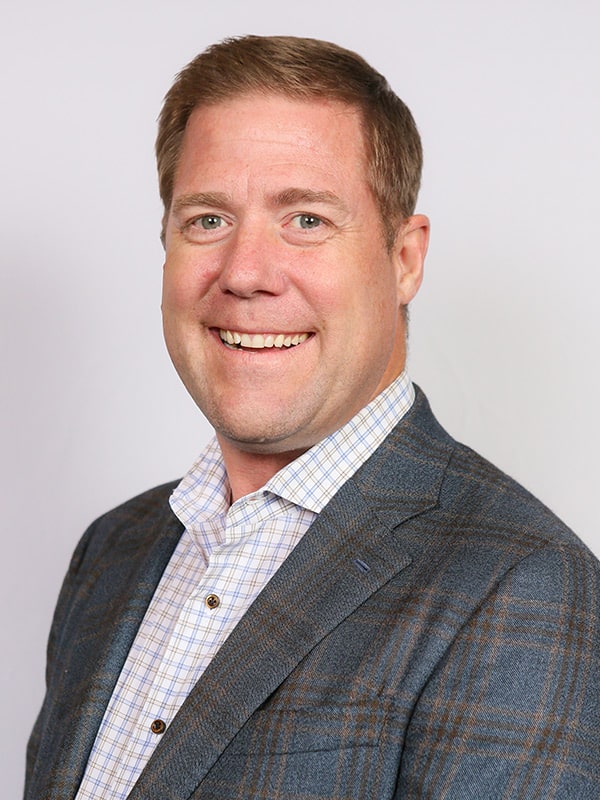
Paula’s son, Chase Key, joined ASCO in 2009 and was the first of the third generation to return to the family business. He earned a Bachelor of Science in Industrial Engineering from the University of Oklahoma and later completed a Master’s degree in Management at Texas Tech University.
After graduating from the University of Oklahoma in 2006, Chase began his career with UPS as part of their engineering team. In 2009, he rejoined ASCO, gaining experience in various roles, including the service department, rental sales, and as branch manager for the Lubbock Case store. Today, Chase serves as South Area Sales Manager.
Chase is actively involved in his community as Vice Chairman of the Covenant Hospital Foundation Board and a member of the Lubbock Executive Association (LEA). An Eagle Scout, Chase fondly recalls completing a 50-mile trek in Canada, an experience that continues to inspire him. He enjoys outdoor activities such as hunting and golf.
Chase is married to Amy Collins of Stillwater, Oklahoma, and together they have three children.

Bill’s daughter, Paula Wright Key, and treasurer for ASCO, is also proud to be part of the family operation. She graduated from the University of Texas at Austin in 1979 with a Bachelor of Business Administration (BBA) in marketing. That same year, Paula married Charles Ellis Key and moved to Dallas, where Charles joined InterFirst Bank as a Vice President.
In 1988, Paula and Charles returned to Lubbock, and Paula began her career at ASCO, working in the accounting department, working with payroll and accounts receivable.
Paula has been deeply involved in her community, serving on various boards, including the Texas Tech Foundation Board, Hospice of Lubbock Board, the Laura W. Bush Institute for Women’s Health, and the Board of Trustees for All Saints Episcopal School.
Paula and Charles have two children, Charles Ellis Key Jr. (Chase) and Carolyn, as well as four grandchildren.
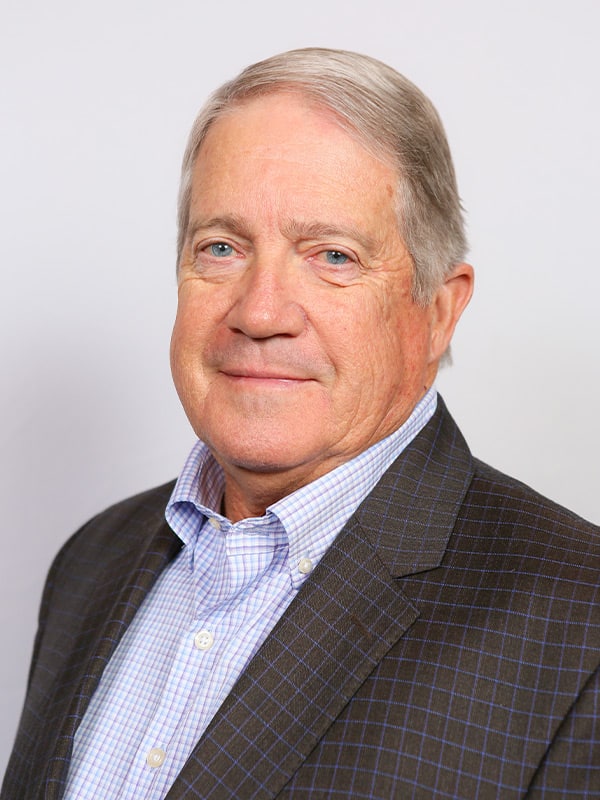
Steve Wright graduated from Texas Tech University in 1974 with a degree in Business Management. Shortly after, he joined his father and brother at ASCO, where he gained experience in nearly every role within the company.
In 1982, Steve and his family moved to Casper, Wyoming, where he managed ASCO Equipment-Wyoming, a Clark-Michigan distributorship serving the state. In 1984, he returned to Amarillo and now serves as President of ASCO.
Steve and his wife, Lea, are deeply involved in local, state, and national politics. Steve has also contributed to his community by serving on several boards, including Senate District 31, the Amarillo Executive Club, the Texas Tech Red Raider Club Board of Directors, and the Advisory Board for Wells Fargo Bank, among others.
An avid outdoorsman, Steve enjoys hunting and fishing. Steve and Lea have three children: Robyn, Courtney, and Brandon.
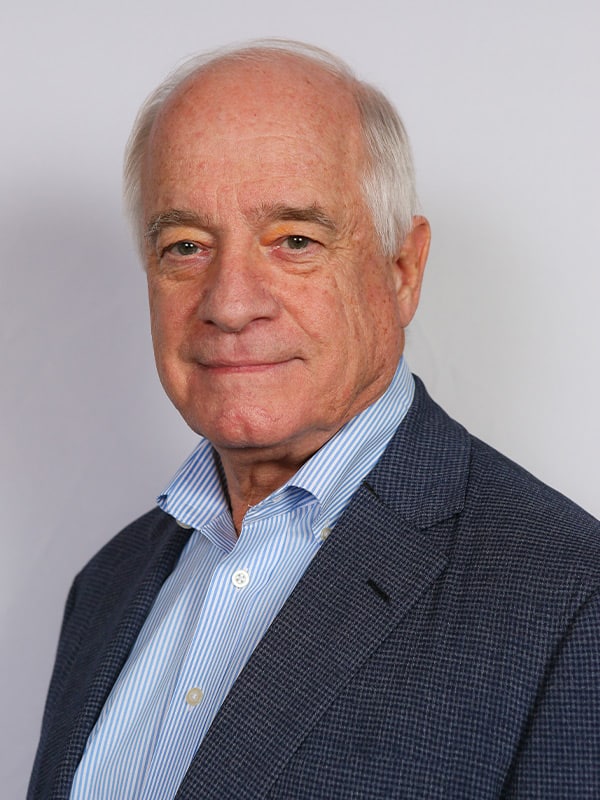
Brax graduated from the University of Texas in 1971 with a Bachelor of Science in Mechanical Engineering. After graduation, he began his career as an Offshore District Project Engineer for Exxon. He also served in the United States Army Reserve for six years, achieving the rank of sergeant in a heavy construction battalion.
Brax has held nearly every position at ASCO, gaining invaluable experience across the company before becoming Chief Executive Officer in 1997. Over the years, he has also served on numerous manufacturer advisory boards as well as other bank and company boards, contributing his expertise to guide key decisions.
Outside of work, Brax teaches the Adult Seekers Sunday School class at First Christian Church, where he serves as an elder. In his spare time, he enjoys golfing, camping, fly-fishing, reading, and writing. Brax is married to Beth, and together they have two children, John and Jill, and five grandchildren.