


Request a Quote - New
"*" indicates required fields

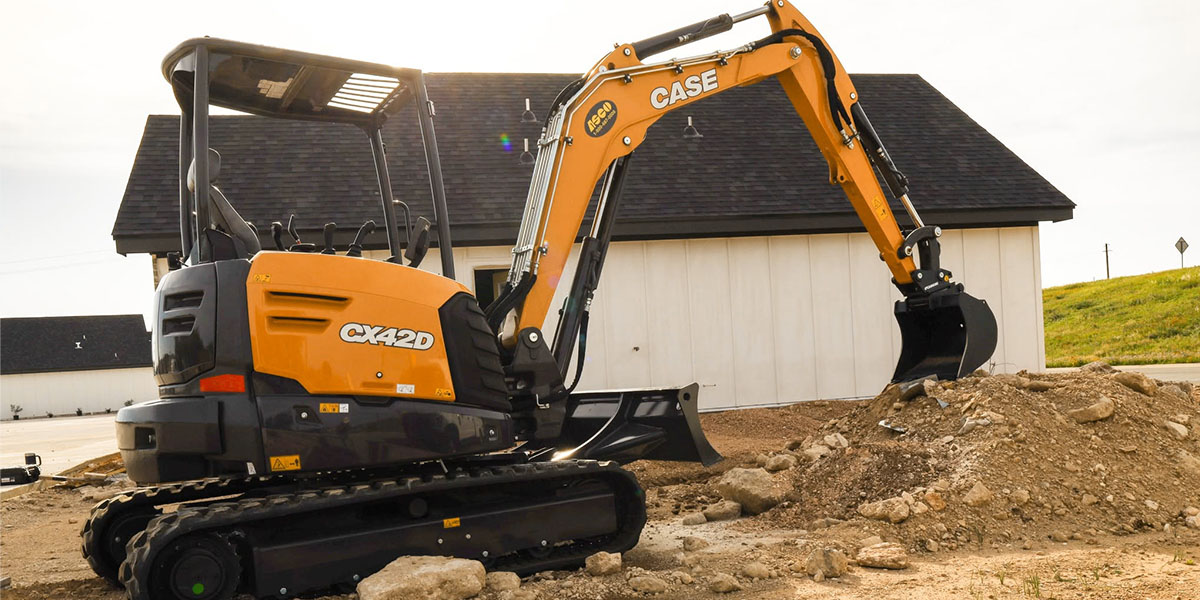
Compact equipment demand is growing because construction has fundamentally changed. Wide-open jobsites have given way to tight urban projects and residential redevelopment, where space is at a premium, while smaller crews and tighter budgets force contractors to do more with less.
Mini excavators, skid steers, and compact track loaders answer all three challenges. These machines navigate narrow access points that larger equipment can't reach, operate efficiently with minimal crews, and deliver strong ROI without the overhead of full-sized machines. Understanding what's driving this shift can help you decide if compact equipment is the right move for your business.
Multiple market forces are pushing construction contractors, developers, and municipalities toward compact solutions.
Open-field construction is becoming less common as cities grow and redevelopment projects increase. In the 2024 Nature Cities study, urban structural growth in more than 1,550 global cities shifted from outward expansion to more vertical, dense development.
In the U.S., the shift toward infill and redevelopment projects is supported by the decrease in the Land Consumption Rate to Population Growth Rate (LCRPGR), down from 0.838 (2000–2010) to 0.627 (2010–2020). This means less open-field land is being built on for each new person, driving growth within existing areas. Urban infill, residential remodeling, and municipal infrastructure work are increasingly central to the construction industry, and these environments demand different equipment than traditional large-scale projects.
The financial pressure is real. New home construction costs continue to rise, putting builders under intense pressure to improve efficiency wherever possible. Compact equipment helps contractors work profitably in tight residential spaces where larger machines would require extensive site prep or simply wouldn't fit. When profit margins are thin, the ability to maneuver a mini excavator through a side yard can make the difference between winning a bid and losing it.
Compact machines deliver substantial financial advantages. The up-front purchase price is lower than full-sized equipment, reducing the capital investment required to expand your fleet. Fuel consumption drops significantly with smaller engines, and transportation between jobsites becomes simpler since many compact machines can be trailered without a commercial driver's license. These combined savings can deliver faster ROI.
The productivity gains can be just as impressive. Compact equipment delivers high output without the overhead of larger machines, which means you're getting serious work done without paying for capacity you don't need.
The construction industry is short roughly 500,000 skilled workers. Compact equipment offers a practical response. Intuitive controls and simpler operation reduce training time, allowing newer operators to become productive faster.
This advantage extends beyond just filling open positions. When experienced operators can move seamlessly between a skid steer and a compact track loader without extensive retraining, your team stays productive even as projects and equipment needs shift.
Not every contractor is ready to purchase compact equipment outright, and the rental market provides a strategic alternative. Renting allows you to access the exact machine and attachments you need for a specific project without committing significant capital.
Flexible equipment rental options let you match your equipment to your project timeline and budget. Renting also gives you the chance to evaluate different compact models before making a purchase decision, reducing the risk of investing in the wrong machine.
Three machine types are driving growth across the compact equipment market.
More contractors are investing in compact track loaders as jobsite conditions demand tracks over tires. When work requires low ground pressure and superior traction on soft, uneven, or delicate surfaces, compact track loaders deliver performance that wheeled machines can't match. They excel in muddy conditions, on slopes, and environments where protecting the ground surface matters, such as landscaping projects or finished turf areas.
The compact track loader market continues to expand for good reason. These machines come in several different sizes, but all deliver impressive power relative to their footprint. The track design distributes weight evenly, reducing rutting and soil compaction, while still allowing contractors to complete demanding jobs and operate high-flow attachments in tight spaces.
Mini excavator trends point to a shift in how contractors approach working in tight spaces. More operators are choosing these machines for urban and residential projects where access is limited and precision matters. Their zero-tail swing design allows work against walls, fences, and property lines without the rear end extending beyond the tracks, making them essential for foundation work, utility installation, and landscaping.
The developments in modern mini excavators mean they deliver the digging power needed for demanding applications while remaining small enough to trailer between jobs. They handle work that once required full-sized excavators but in spaces where larger machines won't fit.
Contractors are turning to skid steers for good reason. Their tight turning radius and ability to spin in place make them ideal for material handling, debris removal, and loading tasks in crowded work areas. For crews managing diverse responsibilities, a skid steer functions as a multipurpose tool that adapts to whatever the day requires.
Versatile skid steer loaders handle everything from moving pallets to grading surfaces to clearing snow. Growing skid steer demand reflects the shift toward smaller jobsites and leaner crews, where a single machine performing many tasks eliminates the need for multiple specialized pieces of equipment.
From electrification to more powerful models, there are many benefits to investing in the latest compact equipment.
A single compact machine can replace multiple pieces of specialized equipment thanks to the wide range of available attachments. Buckets, augers, trenchers, breakers, grapples, and dozens of other tools transform a skid steer or compact track loader into whatever the job requires. This versatility is central to the cost-effectiveness of compact equipment.
Attachment compatibility also means your investment grows with your business. As you take on new types of projects, adding a specialized attachment costs far less than buying an entirely new machine.
Compact equipment continues to evolve with features that make these machines smarter and more future-proof. Telematics systems allow you to monitor fleet health, track machine location, and schedule maintenance based on actual operating hours. This technology reduces unexpected downtime and helps you make data-driven decisions about equipment deployment.
Electrification is another significant trend. Electric mini excavators meet stringent emissions standards and enable indoor operation where diesel engines aren't feasible. Battery-powered models eliminate engine noise and lower operating costs by cutting fuel expenses entirely.
Modern compact equipment boasts impressive power, lift capacity, and hydraulic performance that allows these machines to tackle demanding jobs once reserved for much larger equipment. Advanced hydraulic systems, optimized engine designs, and engineered weight distribution all contribute to machines that punch well above their size class.
The result is equipment that navigates tight gates and doorways yet lifts thousands of pounds, or mini excavators that ride on standard trailers but dig with the force needed for commercial foundation work. This combination of compact dimensions and serious capability makes these machines a strategic advantage rather than a compromise.
At ASCO Equipment, we've spent over 65 years helping businesses find the right machines for the job. Our team understands the challenges you're facing because we see them every day across our 27 locations in Texas, Oklahoma, and New Mexico.
Whether you're ready to buy, exploring flexible equipment rental options, or want to talk through your options, we're here to help. As a proud dealer of CASE Construction equipment and other leading brands, we've got the compact solutions to get it done. Contact us today — We're On It!

John Wright, Brax Wright’s son, joined ASCO in early 2013 as part of the third generation of family leadership. A proud member of the Fightin’ Texas Aggie Class of 2007, John earned a Bachelor of Science in Mechanical Engineering from Texas A&M University.
After graduation, John worked as a structural design engineer for L-3 Communications MID, specializing in C3ISR (Command, Control, Communications, Intelligence, Surveillance, and Reconnaissance) aircraft. In 2012, John completed a Master of Business Administration with a concentration in Strategy and Entrepreneurship from Southern Methodist University.
In January 2013, John joined the family business and played a key role on the Hi-Way acquisition team. He has since taken on a variety of responsibilities. He currently oversees the IT department.
In his spare time, John enjoys weightlifting, woodworking, cooking, and reading. He met his wife, Elizabeth Boothe, at Coronado High School while competing on the Math Team. Together, they have two beautiful daughters.

Courtney Vanderham, Steve Wright’s daughter, joined ASCO in 2010. She earned a Bachelor of Business Administration in Finance from Texas Tech University in 2005 and went on to complete her MBA at West Texas A&M University in 2007 while working at ASCO. Courtney later attended Tulane University, earning a Master of Finance (MFIN) with a specialization in Energy Derivatives and Risk Management.
Following her MFIN, Courtney worked as a sales and use tax consultant for Ryan Inc., North America’s largest tax consulting firm. She returned to ASCO in 2010, where she gained experience in the accounting department in Lubbock before transitioning to Amarillo. She currently serves in an Operations Manager role
Courtney is actively involved in her community as a member of the Junior League of Amarillo, Daughters of the Republic of Texas, and the Power of the Purse committee for the Laura Bush Women’s Health Science Institute.
Courtney is married to Zachary Vanderham of Visalia, California. Together, they have two children. The family share a love for sports, the outdoors, and spending time with friends.

Paula’s son, Chase Key, joined ASCO in 2009 and was the first of the third generation to return to the family business. He earned a Bachelor of Science in Industrial Engineering from the University of Oklahoma and later completed a Master’s degree in Management at Texas Tech University.
After graduating from the University of Oklahoma in 2006, Chase began his career with UPS as part of their engineering team. In 2009, he rejoined ASCO, gaining experience in various roles, including the service department, rental sales, and as branch manager for the Lubbock Case store. Today, Chase serves as South Area Sales Manager.
Chase is actively involved in his community as Vice Chairman of the Covenant Hospital Foundation Board and a member of the Lubbock Executive Association (LEA). An Eagle Scout, Chase fondly recalls completing a 50-mile trek in Canada, an experience that continues to inspire him. He enjoys outdoor activities such as hunting and golf.
Chase is married to Amy Collins of Stillwater, Oklahoma, and together they have three children.

Bill’s daughter, Paula Wright Key, and treasurer for ASCO, is also proud to be part of the family operation. She graduated from the University of Texas at Austin in 1979 with a Bachelor of Business Administration (BBA) in marketing. That same year, Paula married Charles Ellis Key and moved to Dallas, where Charles joined InterFirst Bank as a Vice President.
In 1988, Paula and Charles returned to Lubbock, and Paula began her career at ASCO, working in the accounting department, working with payroll and accounts receivable.
Paula has been deeply involved in her community, serving on various boards, including the Texas Tech Foundation Board, Hospice of Lubbock Board, the Laura W. Bush Institute for Women’s Health, and the Board of Trustees for All Saints Episcopal School.
Paula and Charles have two children, Charles Ellis Key Jr. (Chase) and Carolyn, as well as four grandchildren.

Steve Wright graduated from Texas Tech University in 1974 with a degree in Business Management. Shortly after, he joined his father and brother at ASCO, where he gained experience in nearly every role within the company.
In 1982, Steve and his family moved to Casper, Wyoming, where he managed ASCO Equipment-Wyoming, a Clark-Michigan distributorship serving the state. In 1984, he returned to Amarillo and now serves as President of ASCO.
Steve and his wife, Lea, are deeply involved in local, state, and national politics. Steve has also contributed to his community by serving on several boards, including Senate District 31, the Amarillo Executive Club, the Texas Tech Red Raider Club Board of Directors, and the Advisory Board for Wells Fargo Bank, among others.
An avid outdoorsman, Steve enjoys hunting and fishing. Steve and Lea have three children: Robyn, Courtney, and Brandon.

Brax graduated from the University of Texas in 1971 with a Bachelor of Science in Mechanical Engineering. After graduation, he began his career as an Offshore District Project Engineer for Exxon. He also served in the United States Army Reserve for six years, achieving the rank of sergeant in a heavy construction battalion.
Brax has held nearly every position at ASCO, gaining invaluable experience across the company before becoming Chief Executive Officer in 1997. Over the years, he has also served on numerous manufacturer advisory boards as well as other bank and company boards, contributing his expertise to guide key decisions.
Outside of work, Brax teaches the Adult Seekers Sunday School class at First Christian Church, where he serves as an elder. In his spare time, he enjoys golfing, camping, fly-fishing, reading, and writing. Brax is married to Beth, and together they have two children, John and Jill, and five grandchildren.