
Request a Quote - New
"*" indicates required fields

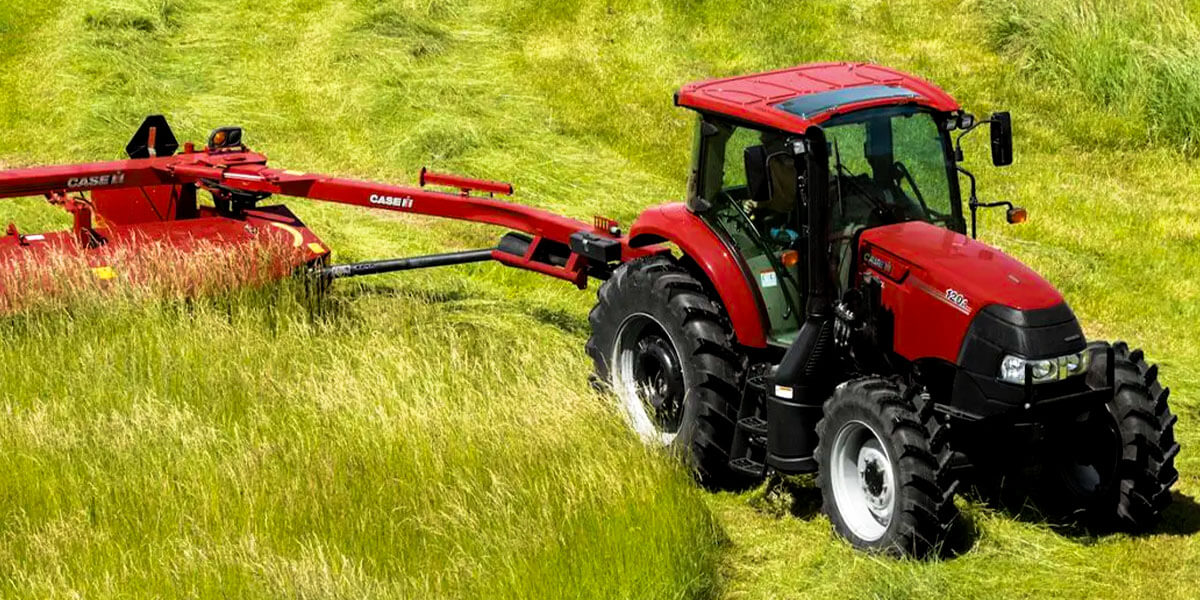
Harvest season puts your equipment under maximum stress for days or weeks at a time. A breakdown costs yield, time, and the weather window you can't get back. The good news is that most equipment failures can be addressed when they're caught early.
If you’re not sure whether your equipment is ready for harvest, this pre-season inspection checklist for tractors, combines, and hay equipment walks you through each machine system-by-system, so you can head into harvest knowing what's ready and what needs attention.
A harvest equipment checklist starts with the basics. Machines approaching common planned maintenance intervals may be overdue right now if they worked hard this season.
Dirty filters and low fluid levels can lead to overheating, reduced performance, and unnecessary wear on your equipment, so you'll need to inspect:
Hydraulic issues and belt failures are common challenges of in-season equipment downtime. Most of them show visible warning signs before they become a problem in the field.
Walk around each machine and inspect:
Belts for cracking, glazing, or fraying along the surface.
Belt tension because a loose belt slips, wears faster, and can be a fire risk.
Hoses for soft spots, swelling, or visible damage.
Hydraulic lines and fittings for weeping or active leaks.
Seals for wear or deterioration.
Texas and Oklahoma heat can be tough on batteries and electrical components. If equipment has been sitting since last season, it's important to test and inspect the system first.
Check battery terminals for corrosion and clean them if needed. Inspect cables and connections for fraying, cracking, or loose fittings. Test the alternator to confirm it's charging properly, then verify that all lights, gauges, and safety systems are working.
You'll also need to check wiring harnesses for rodent damage, especially on equipment stored in sheds or barns over winter. Mice can nest in machinery and chew through insulation, leaving exposed wires that can arc or short under load.
According to Oregon State University Extension, electrical faults are a documented cause of combine fires during harvest, alongside hydraulic leaks and crop residue buildup around hot engine components. Inspecting your electrical system before the season starts is both a performance and a safety check.
Tires are easy to overlook until one fails in the middle of a field. Inspecting your tires now can save valuable harvest time by reducing the risk of slow starts, loss of traction, or tire failures. Walk each machine and check for:

Correct tire pressure per manufacturer specifications.
Sidewall cracking or bulging.
Uneven wear patterns.
Tread damage or embedded debris.
Loose or missing wheel hardware.
Underinflated tires can reduce fuel efficiency and affect how evenly the weight is distributed across the field. In soft or wet conditions, they may also cause the machine to bog down or lose traction. For track-equipped machines, inspect track tension and alignment.
For combines and hay equipment, this is where pre-season inspection pays off most directly. A worn feeder chain, a dull chopper knife, or a failing pickup tine are the kinds of problems that don't announce themselves until you're mid-field with a weather window closing.
A combine inspection checklist should follow the crop flow from front to back:
Header and cutter bar: Check for worn or missing knife sections, bent guards, and reel condition. A poor cut at the front affects everything downstream.
Feeder chain: Carefully push the chain together and pull it apart to assess performance, slack, and wear.
Bearings: Remove the belt or chain and spin each shaft by hand. A rough or stiff bearing will not get better in the field.
Rotor and rasp bars: Look for wear past the grade marking on the mounting bolt.
Chopper knives: Missing or dull knives can cause imbalance and vibration.
Cleaning shoes and sieves: Check for bent or damaged chaffer and sieve sections.
After inspection, clean accumulated chaff and crop residue from around the engine, turbocharger, exhaust manifold, and all other hot zones. Research shows that 76.7% of combine fires start in the engine area, most often when crop residue comes into contact with hot surfaces. This figure shows that clean equipment is safer.
Hay season is entirely weather-dependent. When the window opens, you need every piece of equipment ready to run. Walk through these key inspection points:
Disc mowers and mower-conditioners: Check knife condition and sharpness, guard alignment, conditioner roll condition and gap setting, and gearbox oil levels.
Windrowers: Pickup bat condition, header reel timing, header float and leveling.
Balers: Inspect pickup teeth and flighting, baler needles, twine and net wrap system, bale chamber drive belts and chains, knotter and wrapper mechanisms, and bearings throughout.
Today's equipment relies on technology more than ever. Before harvest begins:
Addressing technology issues before you're in the field can help improve efficiency and reduce frustration during critical work windows.
One of the best ways to avoid downtime is to have your equipment inspected by trained technicians before the busy season begins. This is why creating a comprehensive farm equipment maintenance checklist and scheduling pre-harvest tractor maintenance several weeks before harvest is beneficial.
For example, ASCO's factory-trained technicians can help with:
Planned maintenance inspections.
Fluid and filter changes.
Hydraulic system inspections.
Electrical diagnostics and repairs.
Wear component assessment and replacement.
The difference between finding a problem now and in the field is between a scheduled repair and an emergency one. Parts are easier to source, labor is available, and your equipment is ready when harvest begins.
Harvest season is challenging enough without equipment letting you down at the worst possible moment. A little preparation now goes a long way toward reducing costly downtime and giving you the confidence to hit the field when the time is right.
Whether you need a planned maintenance inspection, replacement parts, or you're considering an upgrade to new equipment, the team at ASCO Equipment is here to help. With over 65 years of serving Texas, New Mexico, and Oklahoma, we're your partner in keeping your operation moving.
Contact ASCO today or find a location near you, and let's make sure you're ready when harvest arrives.


John Wright, Brax Wright’s son, joined ASCO in early 2013 as part of the third generation of family leadership. A proud member of the Fightin’ Texas Aggie Class of 2007, John earned a Bachelor of Science in Mechanical Engineering from Texas A&M University.
After graduation, John worked as a structural design engineer for L-3 Communications MID, specializing in C3ISR (Command, Control, Communications, Intelligence, Surveillance, and Reconnaissance) aircraft. In 2012, John completed a Master of Business Administration with a concentration in Strategy and Entrepreneurship from Southern Methodist University.
In January 2013, John joined the family business and played a key role on the Hi-Way acquisition team. He has since taken on a variety of responsibilities. He currently oversees the IT department.
In his spare time, John enjoys weightlifting, woodworking, cooking, and reading. He met his wife, Elizabeth Boothe, at Coronado High School while competing on the Math Team. Together, they have two beautiful daughters.

Courtney Vanderham, Steve Wright’s daughter, joined ASCO in 2010. She earned a Bachelor of Business Administration in Finance from Texas Tech University in 2005 and went on to complete her MBA at West Texas A&M University in 2007 while working at ASCO. Courtney later attended Tulane University, earning a Master of Finance (MFIN) with a specialization in Energy Derivatives and Risk Management.
Following her MFIN, Courtney worked as a sales and use tax consultant for Ryan Inc., North America’s largest tax consulting firm. She returned to ASCO in 2010, where she gained experience in the accounting department in Lubbock before transitioning to Amarillo. She currently serves in an Operations Manager role
Courtney is actively involved in her community as a member of the Junior League of Amarillo, Daughters of the Republic of Texas, and the Power of the Purse committee for the Laura Bush Women’s Health Science Institute.
Courtney is married to Zachary Vanderham of Visalia, California. Together, they have two children. The family share a love for sports, the outdoors, and spending time with friends.

Paula’s son, Chase Key, joined ASCO in 2009 and was the first of the third generation to return to the family business. He earned a Bachelor of Science in Industrial Engineering from the University of Oklahoma and later completed a Master’s degree in Management at Texas Tech University.
After graduating from the University of Oklahoma in 2006, Chase began his career with UPS as part of their engineering team. In 2009, he rejoined ASCO, gaining experience in various roles, including the service department, rental sales, and as branch manager for the Lubbock Case store. Today, Chase serves as South Area Sales Manager.
Chase is actively involved in his community as Vice Chairman of the Covenant Hospital Foundation Board and a member of the Lubbock Executive Association (LEA). An Eagle Scout, Chase fondly recalls completing a 50-mile trek in Canada, an experience that continues to inspire him. He enjoys outdoor activities such as hunting and golf.
Chase is married to Amy Collins of Stillwater, Oklahoma, and together they have three children.

Bill’s daughter, Paula Wright Key, and treasurer for ASCO, is also proud to be part of the family operation. She graduated from the University of Texas at Austin in 1979 with a Bachelor of Business Administration (BBA) in marketing. That same year, Paula married Charles Ellis Key and moved to Dallas, where Charles joined InterFirst Bank as a Vice President.
In 1988, Paula and Charles returned to Lubbock, and Paula began her career at ASCO, working in the accounting department, working with payroll and accounts receivable.
Paula has been deeply involved in her community, serving on various boards, including the Texas Tech Foundation Board, Hospice of Lubbock Board, the Laura W. Bush Institute for Women’s Health, and the Board of Trustees for All Saints Episcopal School.
Paula and Charles have two children, Charles Ellis Key Jr. (Chase) and Carolyn, as well as four grandchildren.

Steve Wright graduated from Texas Tech University in 1974 with a degree in Business Management. Shortly after, he joined his father and brother at ASCO, where he gained experience in nearly every role within the company.
In 1982, Steve and his family moved to Casper, Wyoming, where he managed ASCO Equipment-Wyoming, a Clark-Michigan distributorship serving the state. In 1984, he returned to Amarillo and now serves as President of ASCO.
Steve and his wife, Lea, are deeply involved in local, state, and national politics. Steve has also contributed to his community by serving on several boards, including Senate District 31, the Amarillo Executive Club, the Texas Tech Red Raider Club Board of Directors, and the Advisory Board for Wells Fargo Bank, among others.
An avid outdoorsman, Steve enjoys hunting and fishing. Steve and Lea have three children: Robyn, Courtney, and Brandon.

Brax graduated from the University of Texas in 1971 with a Bachelor of Science in Mechanical Engineering. After graduation, he began his career as an Offshore District Project Engineer for Exxon. He also served in the United States Army Reserve for six years, achieving the rank of sergeant in a heavy construction battalion.
Brax has held nearly every position at ASCO, gaining invaluable experience across the company before becoming Chief Executive Officer in 1997. Over the years, he has also served on numerous manufacturer advisory boards as well as other bank and company boards, contributing his expertise to guide key decisions.
Outside of work, Brax teaches the Adult Seekers Sunday School class at First Christian Church, where he serves as an elder. In his spare time, he enjoys golfing, camping, fly-fishing, reading, and writing. Brax is married to Beth, and together they have two children, John and Jill, and five grandchildren.